
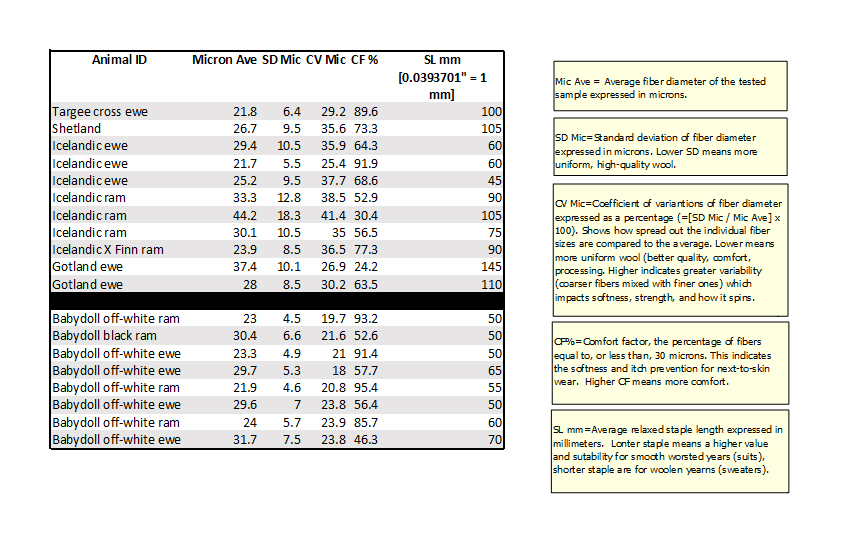
I snagged some Montana Wool Lab testing results posted on social media. The sheep wool tested included a Targee cross; Sheltlands; Icelandics; Gotlands; and an Icelandic/Finn cross. I've noticed, over the years, on various occasions when folks ask about what breed of sheep they should choose to own with plans to use their wool, these breeds are more often than not mentioned. I put together a spreadsheet with the Montana Wool Lab results and then added my own Babydolls' wool testing results. Mine are listed in year groups from top to bottom - 2014, 2017, 2018, & 2020. I chose from my testing results the sheep with the lowest micron and the highest micron count from each year. Compare the results. The Babydolls hold their own! Another example illustrating that we can't let anyone tell us our Babydoll wool is crap.
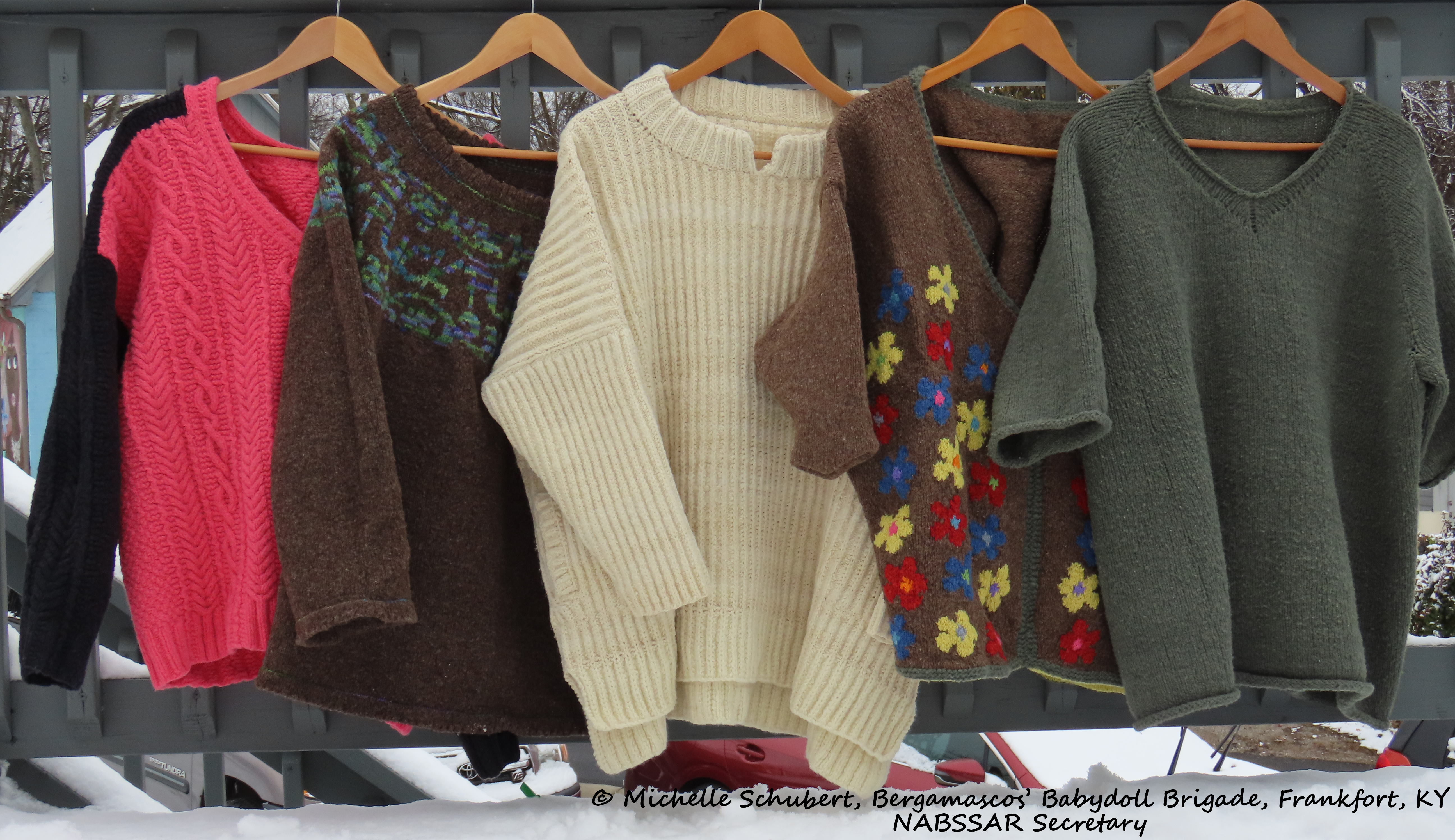
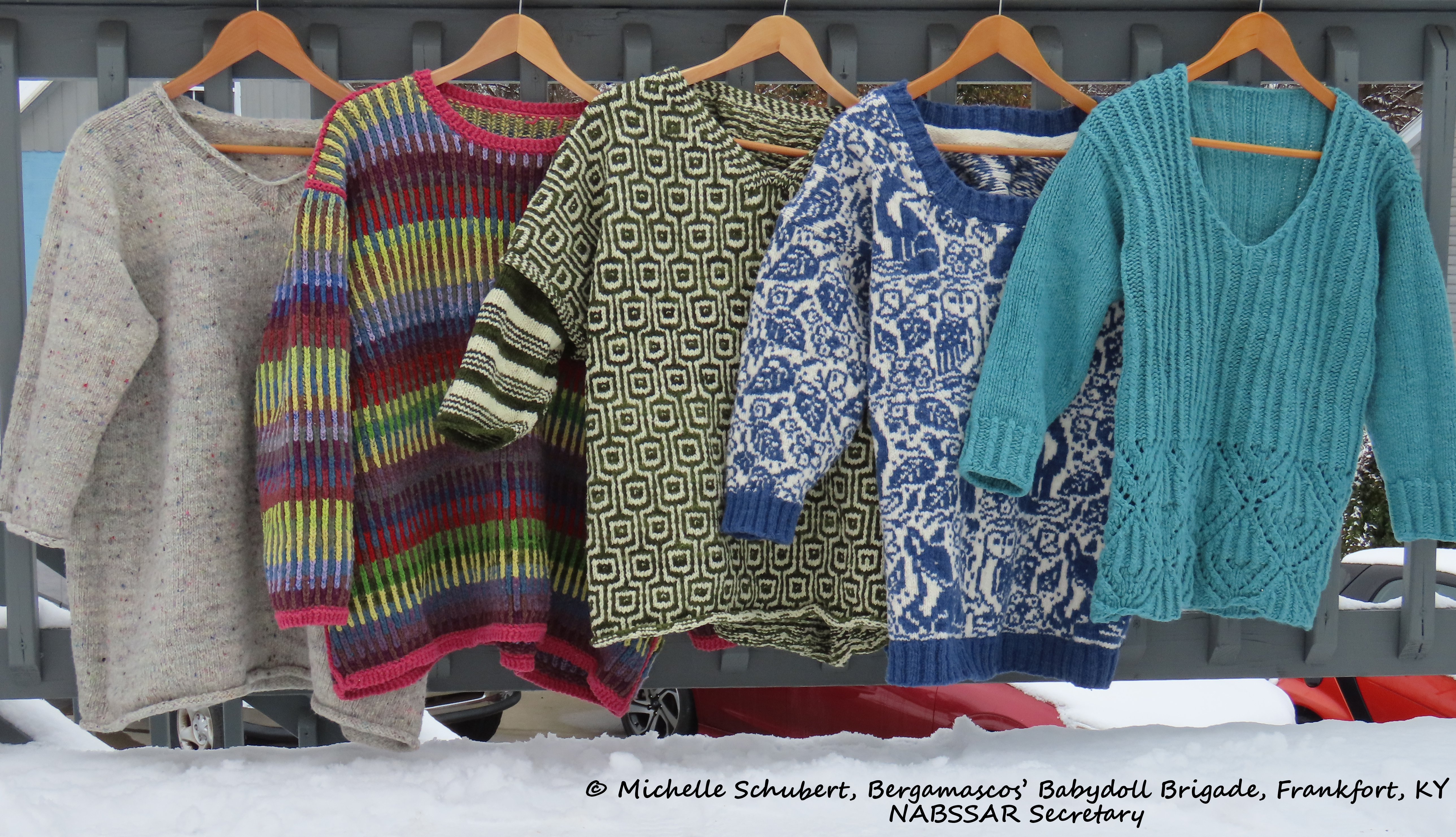
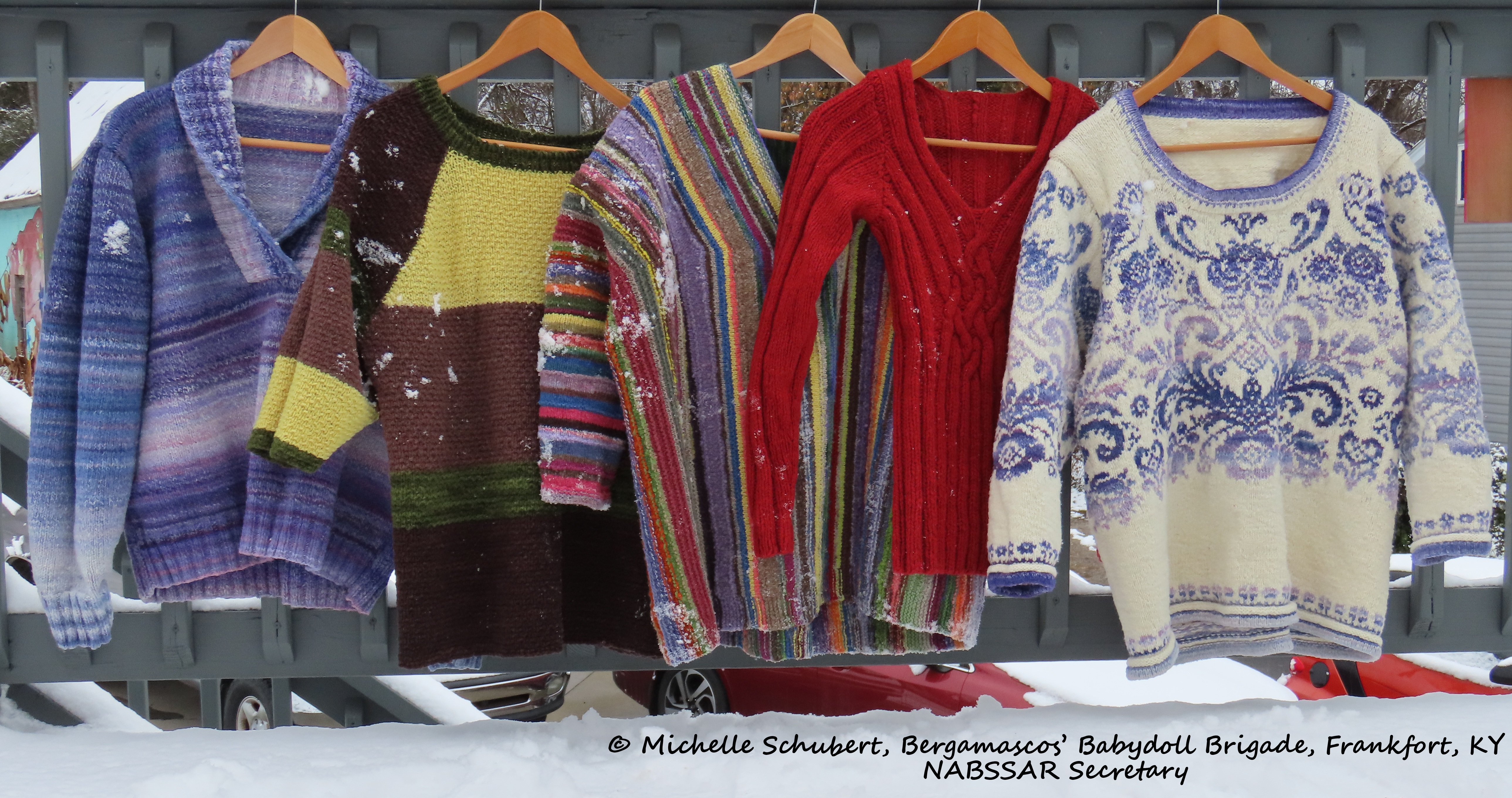
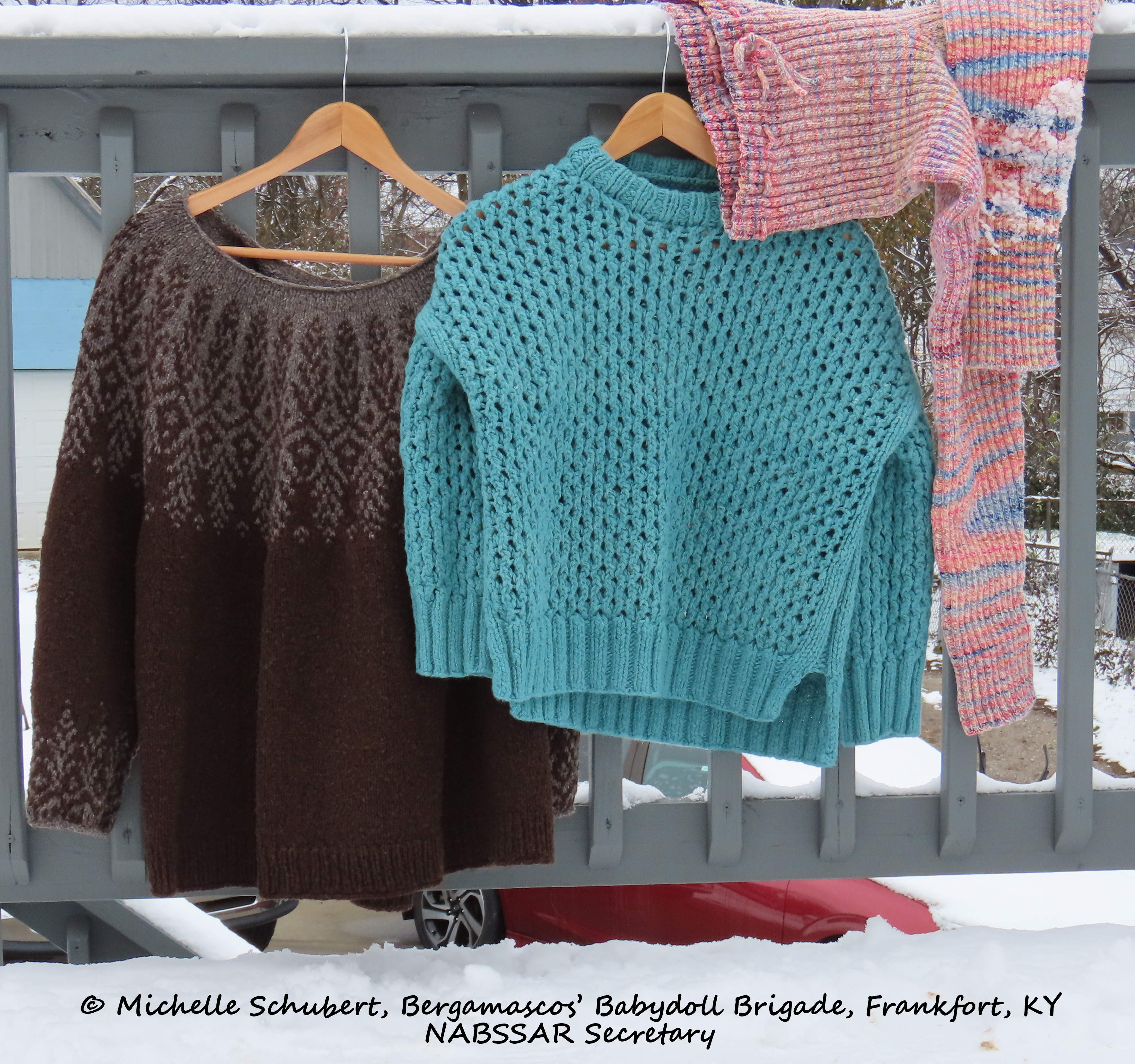
I started working with my flocks' wool in 2012 and it is the only breed I've ever worked with. I definitely love my Babydoll wool. Along with all kinds of items made from 100% Babydoll wool, I've handspun and knitted seventeen sweaters and I recently finished my eighteenth. Photos of them are in this article and there's even a pair of Babydoll wool leggings I made for myself.
If you're interested in having your flock tested, I used Texas
A&M's Bill Sims Wool and Mohair Research Laboratory.
Their testing includes other items beside the 4 on the Montana Wool Lab
results. https://sanangelo.tamu.edu/bsl/
The OFDA2000 (Staple): $5.00 per sample. Cut a 2 x 2 patch as
close to the skin as possible to get the full fiber length.
Take the sample from the mid-side of the sheep. Put the
sample in paper, not a sealed plastic bag, to prevent
moisture/condensation. Include the animal's ID, breed, date,
and your info on the paper the sample is in.
 |
 |
| © NABSSAR 2001-2026 |